

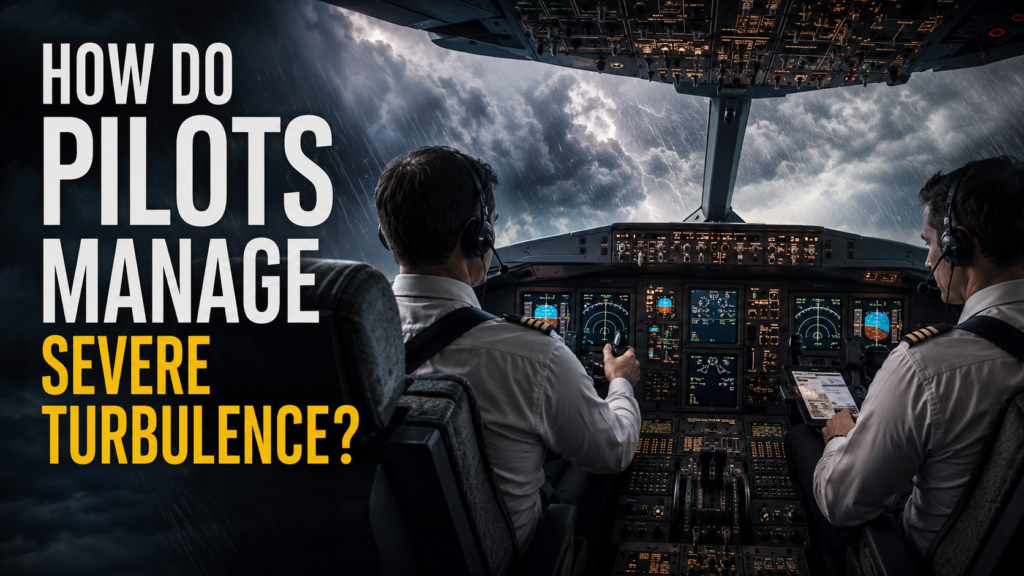
Your coffee tips over, the seatbelt sign flashes, and the aircraft dips without warning. For a passenger, severe turbulence feels like the sky has turned against them, hearts racing and knuckles white on the armrests. For the pilot up front, it’s just another Tuesday at the office. So, what exactly happens behind the cockpit door when the air gets rough, and how do pilots stay calm and composed while everyone else braces for the worst? Let’s find out.
What is Turbulence, Really?
Turbulence is simply irregular air movement. Instead of flowing smoothly, air moves in unpredictable currents, and when an aircraft passes through it, you in the passenger seat feel the bumps, drops, and shakes. It isn’t a malfunction; it’s a natural part of flying through a turbulent atmosphere. Pilots classify it as light, moderate, severe, or extreme, each requiring a different response from the crew.
So, why Does Turbulence Happen?
Several natural forces disturb the air a jet is flying through, it may include any of the following:
Convective currents: Rising warm air, often near thunderstorms, pushes upward and disturbs the smoother air around it. So, aircraft may fall into a turbulent atmosphere.
Mountain waves: When wind flows over mountain ranges, it creates rolling waves of air, some of which reach cruising altitude.
Wake turbulence: Every aircraft leaves behind a trail of swirling air from its wingtips. It can rock a following aircraft.
Jet streams and wind shear: Sudden shifts in wind speed or direction, especially near jet streams, create rough patches in otherwise clear skies.
Clear Air Turbulence (CAT): This is the trickiest one. It strikes in cloudless skies with no visible warning and mostly stems from wind shear at high altitude.
If you’re dreaming of a career in the cockpit, these causes aren’t optional trivia. This knowledge forms the foundation of your pilot training journey. When you start studying in a pilot training centre in India, you’ll come to know this knowledge.
How Do Pilots Prepare Before They Even Take Off?
Long before an aircraft leaves the gate, the crew has already started managing turbulence. A thorough weather briefing lays out expected conditions along the route, so pilots can plan altitudes and paths that dodge the roughest air.
During training, you’ll get familiar with a few weather tools that become second nature over time:
| Tool | What It Tells the Pilot |
| SIGMETs | Advisories on hazardous weather, including severe turbulence, along the route |
| METARs | Current weather conditions at and around an airport |
| PIREPs | Real-time turbulence reports shared by pilots who’ve flown through the area recently |
| Weather Radar | Onboard detection of storm cells and precipitation that often signals rough air ahead |
Table 1: Aviation tools used by pilots to manage severe turbulence.
This usage of all these tools means that by the time turbulence actually shows up, the flight crew has usually already anticipated it.
How Do Pilots Handle Turbulence Mid-Flight?
Once the pilots are airborne, managing turbulence becomes a mix of technology, technique, and communication. Here’s what typically happens when the air gets rough.
Adjusting Altitude and Speed
If turbulence is expected or encountered, pilots often request a climb or descent from ATC to find calmer air. They also slow the aircraft to what’s called turbulence penetration speed, which reduces stress on the airframe during moderate to severe bumps.
Securing the Cabin
The seatbelt sign isn’t there for a formality; it’s a safety call. Most injuries during turbulence happen to people who are standing or unbuckled. Cabin crew is briefed to secure the cabin, stow loose items, and take their own seats the moment conditions get rough.
Staying in the Loop with ATC and Other Aircraft
Pilots constantly exchange information with air traffic control (ATC) and nearby flights. If one aircraft reports turbulence at a certain altitude, that report helps every other crew flying the same route make a smarter, faster decision.
Flying Smoothly, Not Fighting the Air
A well-trained pilot doesn’t try to muscle the aircraft through turbulence. Instead, you learn to maintain a steady attitude, avoid overcorrecting the controls, and let the aircraft’s natural stability absorb most of the bumps.
Keeping Passengers Calm
A calm, clear announcement does more for passenger confidence than any manoeuvre. Pilots are trained to explain what’s happening, because a steady voice on the intercom reassures people faster than anything else.
Is Turbulence Actually Dangerous for the Aircraft?
Here’s something every aspiring pilot should know early: commercial aircraft are built to handle far more stress than turbulence throws at them. Every aircraft goes through rigorous structural testing before certification, precisely to withstand turbulent conditions well beyond what you’d encounter on a normal flight.
That said, severe turbulence can still injure an unrestrained passenger, which is exactly why pilots treat seatbelt compliance so seriously.
How Does Flight Training Prepare You for Turbulence?
You won’t learn to manage turbulence by reading about it alone. A commercial pilot licence course builds this skill layer by layer:
Meteorology classes teach a student pilot why turbulence forms and how to read forecasts.
Simulator sessions let you practise flying through rough air without real-world risk.
Dual flying training puts you in the aircraft with an instructor who shows you how to hold attitude and airspeed when the ride gets turbulent.
Post-flight debriefs help you reflect on what worked and what you’d do differently next time.
By the time you’re flying solo, turbulence stops feeling like a crisis. It becomes just another condition you manage, the same way you’d manage a crosswind landing.
In Conclusion
Severe turbulence looks alarming from a passenger seat, but for a trained pilot, it’s a well-practised part of the job. Between weather tools, structural design, and layered training, pilots keep every flight safe, even when the sky gets bumpy.
Start Your Journey in the Cockpit with Cockpit Lessons
Curious about what else goes into becoming a confident pilot? At Cockpit Lessons, our instructors walk you through real-world scenarios like turbulence management right from your ground classes. Get in touch with our aviation institute in Bangalore and take your first step towards the cockpit.
Frequently Asked Questions (FAQs)
1. What causes severe turbulence?
Severe turbulence is usually caused by thunderstorms, jet streams, mountain waves, or sudden wind shear. Clear Air Turbulence, which occurs in cloudless skies, is one of the hardest types to predict in advance.
2. Can severe turbulence bring down a plane?
No. Commercial aircraft are engineered and tested to withstand far more stress than turbulence typically generates. Severe turbulence can be uncomfortable and, in rare cases, cause injury, but it does not threaten the structural safety of the aircraft.
3. How do pilots know turbulence is coming?
Pilots rely on pre-flight weather briefings, onboard weather radar, and real-time reports from other aircraft, known as PIREPs, to anticipate turbulence before it’s encountered.
4. Why does the seatbelt sign stay on even in calm weather?
Clear Air Turbulence can strike without warning, even in cloudless skies. Keeping the seatbelt sign on and staying buckled protects passengers from sudden, unexpected bumps.
5. Do pilots get specific training for handling turbulence?
Yes. Meteorology classes, simulator sessions, and supervised flying training all include turbulence management, so pilots build both the theoretical understanding and hands-on skill to handle it confidently.